How to Choose Food-grade O-rings? The Critical Line of Defense for Food Safety
In the food processing industry, a tiny sealing component can determine the safety and compliance of an entire production line. As an indispensable core part of food equipment, the quality of food-grade O-rings directly affects the hygienic safety of food and production efficiency. Today, we will take an in-depth look at the key selection points and application knowledge of these sealing components.
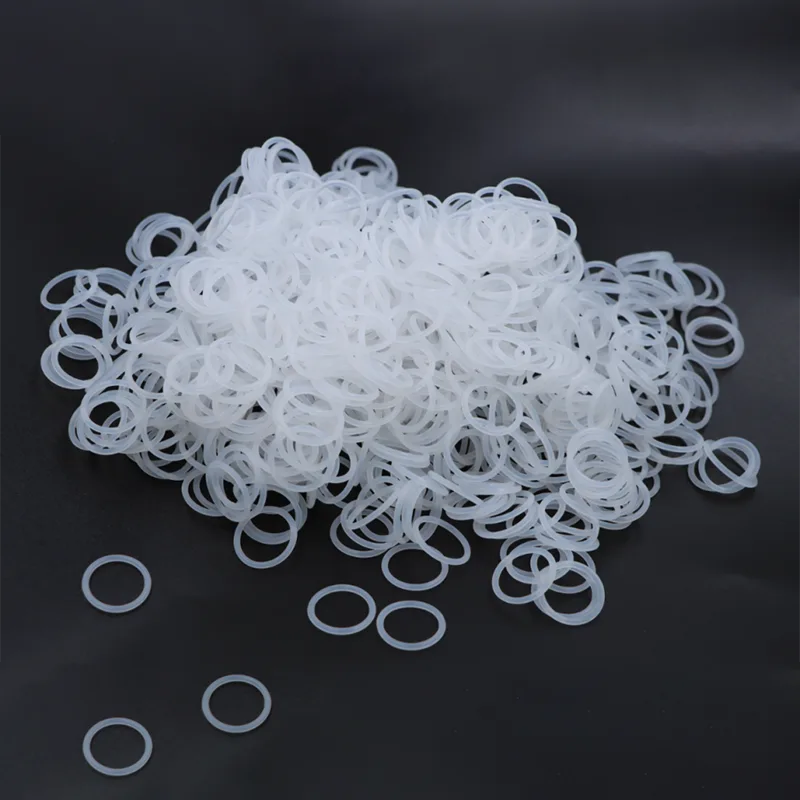
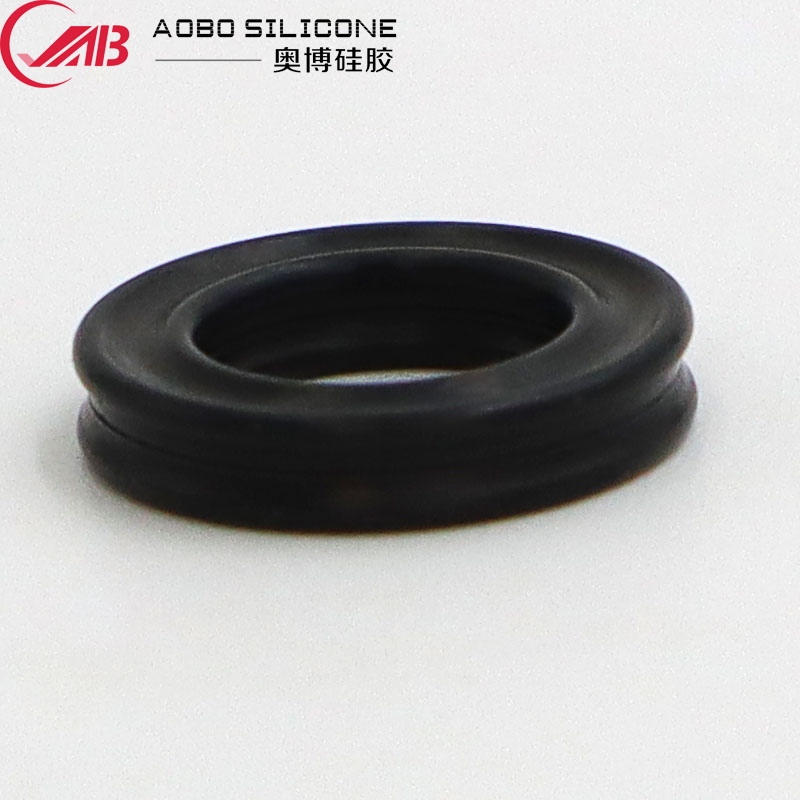
Food-grade O-rings are annular sealing elements made from materials that comply with food safety standards, which can come into direct contact with food without releasing harmful substances. To ensure they do not contaminate food under various working conditions, high-quality products must pass authoritative domestic and international certifications such as FDA, LFGB, and GB 4806.11-2023, which is the most basic entry threshold.
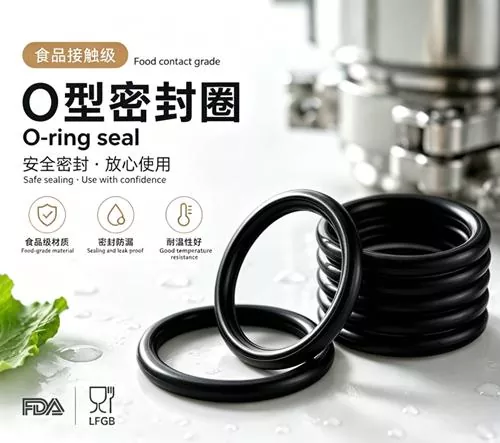
Currently, there are three main materials for food-grade O-rings commonly available on the market: Silicone Rubber, Fluororubber (FKM), and Ethylene Propylene Diene Monomer (EPDM). Silicone rubber has a wide temperature resistance range (-60°C to 230°C), is non-toxic and odorless, and is suitable for high-temperature sterilization equipment, making it an ideal choice for baking and canning processing equipment. Fluororubber is resistant to oil, acids and alkalis, and is applicable to food processing involving fats and oils, such as meat product and edible oil production lines. EPDM is resistant to steam and ozone, and is commonly used in beverage filling production lines and water treatment systems. Each material has its own advantages and needs to be precisely matched according to actual working conditions.
Food-grade O-rings are widely used in multiple fields including beverage filling, dairy product sterilization, edible oil processing, and frozen food production. Different application scenarios have varying requirements for their material and performance. Choosing the wrong O-ring will not only lead to sealing failure and equipment downtime but may also pose serious food safety hazards.
When selecting food-grade O-rings, first confirm whether the product has complete food safety certifications. Second, choose the appropriate material based on actual working conditions—for example, prioritize silicone rubber for high-temperature environments. Finally, pay attention to dimensional accuracy and compression rate to ensure sealing effectiveness and extend service life.
If you are looking for high-quality food-grade O-rings, please click the link below to view our product details. We offer food-grade O-rings in a variety of materials and specifications, all of which have passed authoritative certifications. We support non-standard customization services, and our professional technical team provides one-on-one selection guidance to help you find the most suitable sealing solution.
Related News
- Why Do X-Rings Offer Better Sealing Performance Than O-Rings?
- What International Standards Apply to X-Rings? A Detailed Explanation of Common Dimensional Standard Systems
- 2026 Silicone Plate Recommendations: A Guide to Avoiding Pitfalls in Non-Slip Silicone Plate Selection
- Avoid the Low-Price Trap: Your Complete Guide to Sourcing O-Shaped Silicone Seal Rings
- What is a Silicone Connector? A Full Guide to Its Uses, Materials and Selection
- What Are Silicone Vape Accessories? A Complete Guide to Food-Grade Silicone Smoking Accessories
Leave me a message